Food Service Robots in Thailand 2026: Which Models MK, Tee Noi & Sizzler Use — Is It Worth It?
Compare the food service robots actually used by MK Restaurants, Tee Noi, and Sizzler — BellaBot, KettyBot, Pudu, Keenon pricing, ROI, pros and cons, and how they work.
TL;DR: Food Service Robots in Thailand’s Big Restaurant Chains
In 2026, food service robots have become a familiar sight in Thailand’s major restaurant chains — especially MK Restaurants, Tee Noi, and Sizzler, which use them widely across many branches (along with other suki, buffet, and food-court chains that have followed suit more recently). Two brands dominate the Thai market:
- Pudu Robotics (Shenzhen, China): BellaBot, KettyBot, PuduBot 2
- Keenon Robotics (Shanghai, China): T8, T6, Butler Pro, DINERBOT T9
Both brands sell in Thailand through several distributors, with retail prices starting at 280,000 baht and reaching up to 600,000 baht per unit. For medium-and-larger suki and buffet chains, the ROI pays back in 14 to 22 months.
Thai Restaurants That Actually Use Food Service Robots
MK Restaurants (MK Suki)
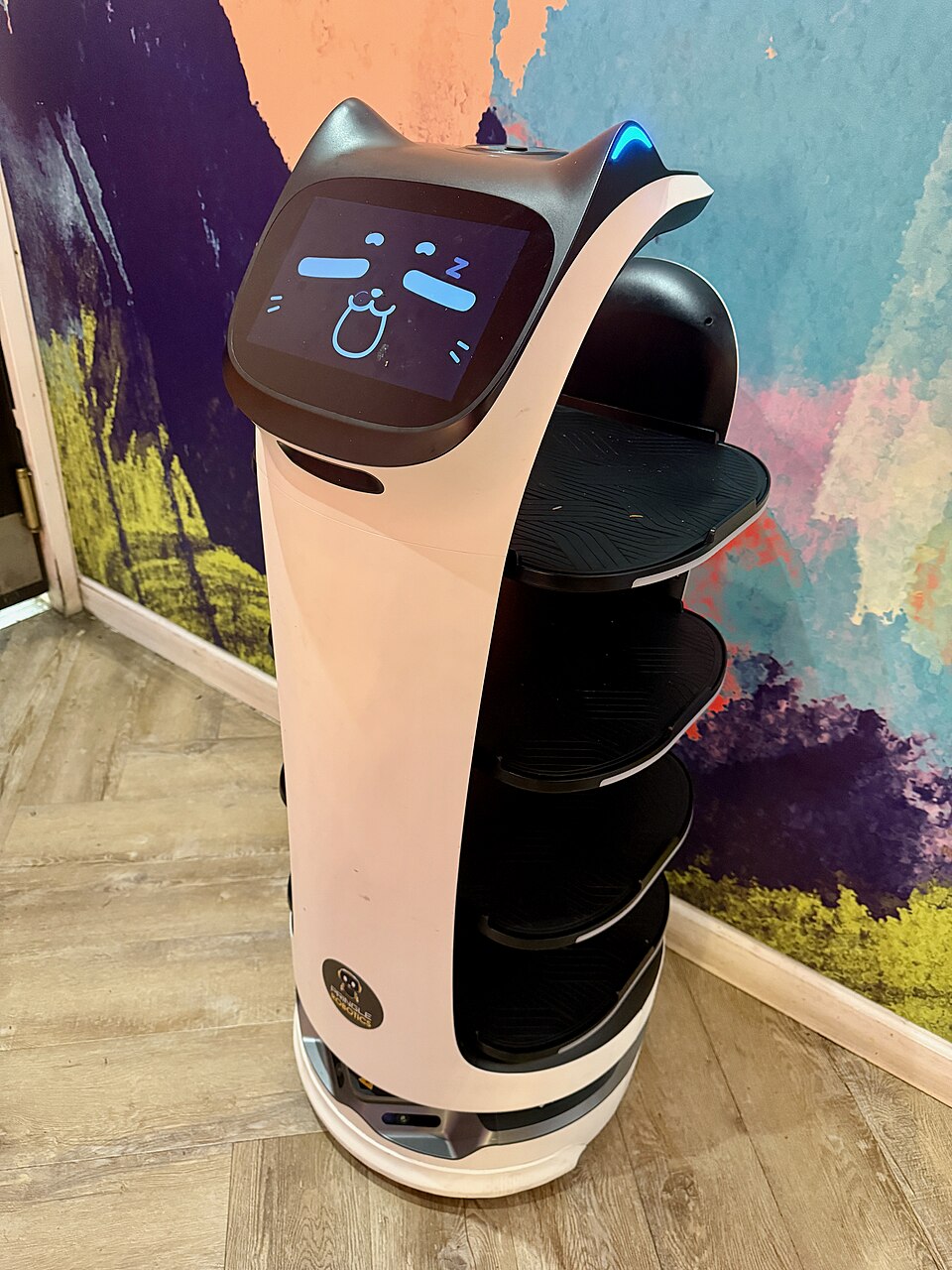
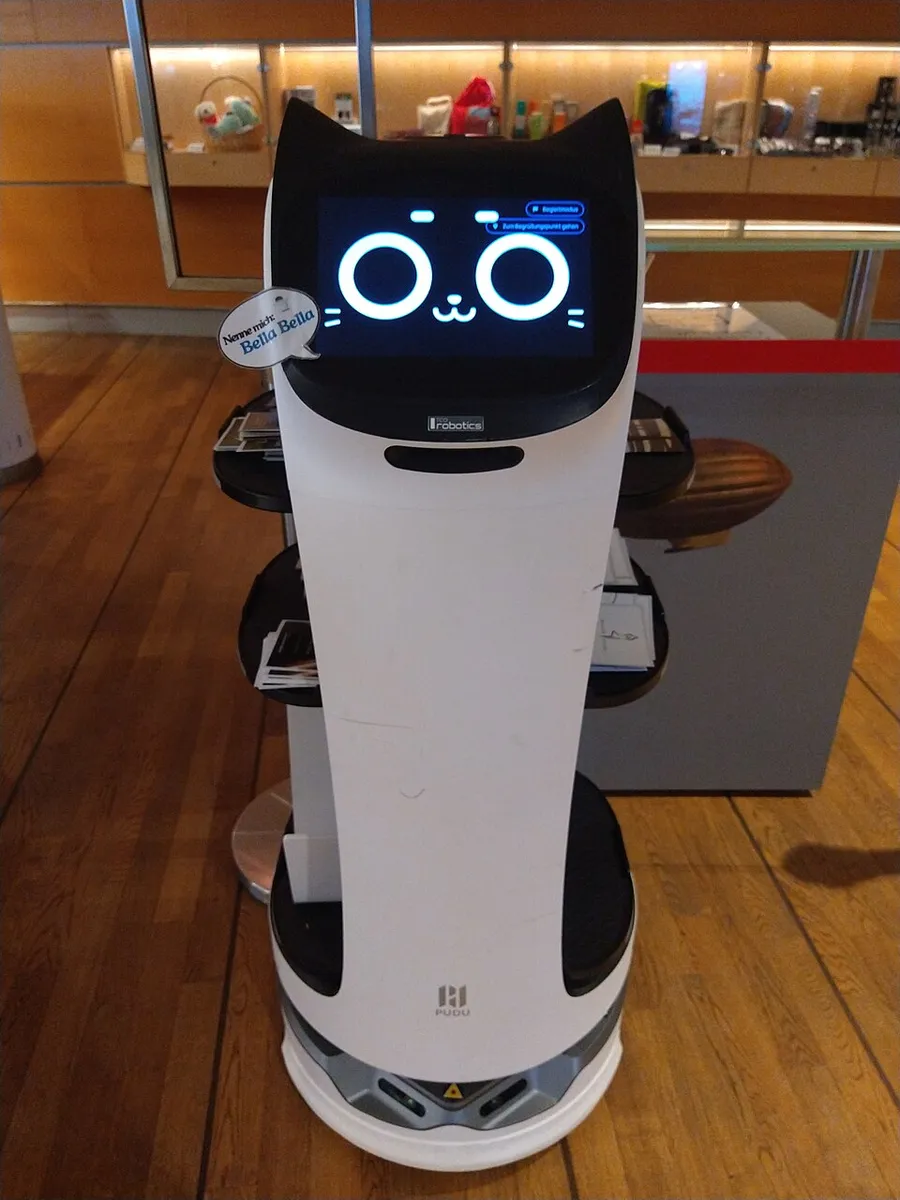
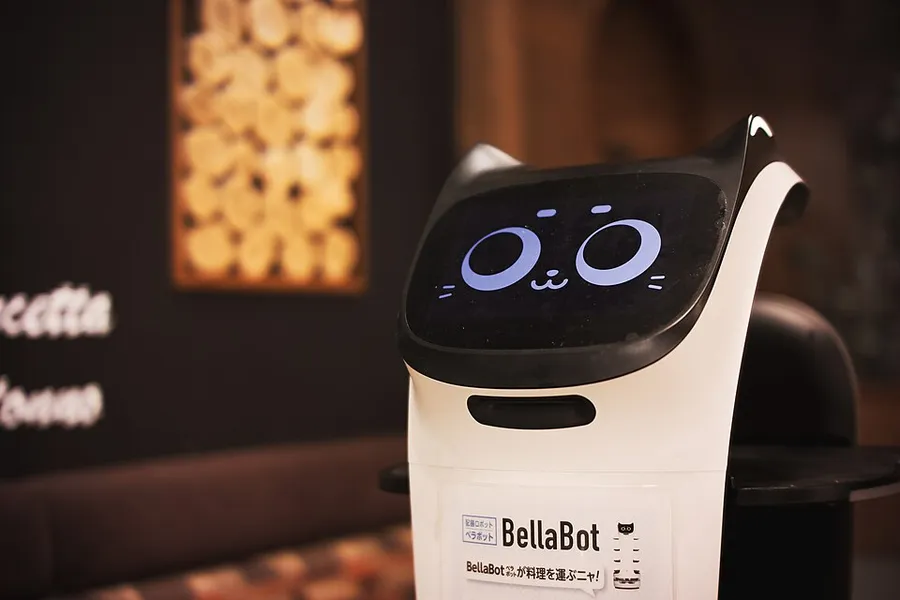
MK began using the Pudu BellaBot in its larger branches back in 2023, and today it’s in many outlets nationwide. Some branches also use the KettyBot to greet customers at the front of house, leading them to their tables and pitching new menu items.
Use cases at MK:
- Delivering food over long distances in branches with elongated layouts
- Reducing how far servers have to walk during peak hours
- Enhancing the customer experience, especially for kids
Tee Noi (Conveyor-Belt Suki)
Tee Noi has expanded rapidly and run into labor shortages, so it brought in both the Pudu BellaBot and Keenon T8 to help out at many branches — particularly high-volume outlets where tables are spread far from the kitchen.
Use cases at Tee Noi:
- Delivering hot pots, vegetables, and broth from the kitchen to the table
- Cutting customer wait times during the lunch and dinner rushes
- Freeing servers to focus on customer interaction and clearing tables
Sizzler
Sizzler uses the Pudu BellaBot and Keenon DINERBOT T6, mainly to help deliver steaks, vegetables, and drinks from the kitchen to customers’ tables.
Use cases at Sizzler:
- Delivering main courses that require a long walk from the kitchen
- Delivering salad-bar items that customers order as add-ons
- Reducing spills and accidents during peak hours
Comparing Popular Models: Pudu BellaBot vs Keenon T8 vs KettyBot
| Model | Thai Market Price | Trays | Navigation | Standout Feature |
|---|---|---|---|---|
| Pudu BellaBot | 350K to 480K | 4 trays, 40 kg total | LiDAR + camera | Cat-face screen that charms customers |
| Pudu KettyBot | 280K to 380K | 2 trays + ad display | Vision-based | Greets and guides customers at the front |
| Pudu PuduBot 2 | 320K to 420K | 4 trays, 60 kg total | LiDAR | Higher payload capacity |
| Keenon T8 | 320K to 450K | 4 trays, 40 kg total | LiDAR + 3D camera | Automatic tray stabilization |
| Keenon DINERBOT T6 | 270K to 360K | 3 trays, 30 kg total | LiDAR | Small footprint, ideal for compact venues |
| Keenon Butler Pro | 280K to 380K | 1 tray + enclosed door | LiDAR | Designed for hotel room delivery |
See detailed comparisons of the Pudu Robotics brand and the Keenon brand.
How Food Service Robots Work
Food service robots operate in three main stages:
1. Mapping the Restaurant
Before the first use, the vendor’s technician team walks the robot around the restaurant once so the SLAM (Simultaneous Localization and Mapping) system can build a 2D and 3D map of the space, memorizing the position of every table, walkway, pillar, and obstacle.
2. Operation: Taking Orders and Delivering
Staff select the destination table number on the robot’s screen, or connect the POS to send commands automatically, then load the trays and hit send. The robot travels along its map using LiDAR, dodging obstacles in real time.
3. Return: Heading Back to Standby
Once the customer removes the food from every tray, the robot detects this via weight sensors and returns to its standby point by the kitchen to wait for the next run. Some models have a charging dock and return to recharge on their own when the battery runs low.
Core components found in every model: a LiDAR sensor, a 3D camera, a two-wheel drive motor, 2-4 serving trays, a 12-16 hour battery, and a touchscreen display.
Pros and Cons of Food Service Robots
Pros
- Lighter workload for staff: They handle the long, heavy carries, protecting staff well-being.
- Higher turnover: During peak hours, customers get their food 15-25% faster.
- Fewer accidents: Spills and drops decrease when robots do the delivering.
- Marketing value: They draw customers, especially families and children.
- Consistent performance: They work 14+ hours a day without tiring.
Cons
- Can’t climb stairs: Multi-floor venues need an elevator, or one robot per floor.
- Floors must be flat: Cracks, steps, and thick carpet make navigation difficult.
- Repetitive announcements: A cheery “Your food is here!” every 30 seconds annoys some people.
- You still need people: to load and clear plates, take payment, and talk to customers.
- Recharging downtime: 2-3 hours of charging for every 8-10 hours of operation.
ROI for Thai Restaurants
Consider a 60-table buffet restaurant running 5 servers × 12 hours.
| Item | Before Robots | After 2 Robots |
|---|---|---|
| Servers | 5 | 3 |
| Monthly wages | 75,000 to 90,000 baht | 45,000 to 54,000 baht |
| Labor savings/month | - | 30,000 to 36,000 baht |
| Robot rental/depreciation/month | - | 30,000 to 40,000 baht |
| Monthly net difference (labor only) | - | -10,000 to +6,000 baht |
Important: In this example, ROI from labor savings alone doesn’t beat the cost of the robots at this size of restaurant. The real ROI comes from revenue uplift:
- A 15-25% increase in table turnover during peak hours → adds 80,000 to 150,000 baht/month in revenue for a restaurant grossing 1 million/month
- Lower staff turnover → cuts recruitment costs by 5,000-15,000 baht/month
- Fewer serving errors → fewer complaints and comped items
Once you include the revenue uplift from higher turnover, the total payback period is 14 to 22 months for medium-and-larger restaurants.
Clear winners: suki, buffet, and large food-court venues over 200 sq m, with more than 30 tables, operating 12+ hours a day.
Not worth it: cafés and small shops, places where 1-2 staff do everything, and venues with uneven floors.
Renting Food Service Robots Monthly
If you’re not ready to commit to a long-term investment, you can rent:
- BellaBot: 18,000 to 25,000 baht/month (service included)
- KettyBot: 12,000 to 18,000 baht/month
- Keenon T8: 15,000 to 22,000 baht/month
Good for: trialing before buying, temporary events, and new branches still unsure of their volume.
How to Choose a Food Service Robot
- Tables spread more than 8 meters from the kitchen → BellaBot, T8, PuduBot 2 (prioritize capacity)
- Small venues under 100 sq m → KettyBot, DINERBOT T6 (small footprint)
- Focused on marketing to draw customers → KettyBot (has an ad display)
- Hotels/hospitals delivering to rooms → Butler Pro (has an enclosed door)
- Just want to test the waters → rent monthly for 3-6 months
Conclusion
By 2026, food service robots in Thailand have moved past the early-adopter phase — big chains like MK, Tee Noi, and Sizzler use them routinely. Prices are now accessible from 280,000 baht, and the ROI is clear for medium-and-larger restaurants with spacious floors that run multiple shifts.
Food service robots are just one part of the broader service robot category, which spans restaurants, hotels, hospitals, and office buildings — see the full overview of models, prices, and use cases on the Service Robot category page.
If you’d like advice on choosing the right food service robot for your restaurant, send us your requirements here — the initial consultation is free and covers Pudu, Keenon, BellaBot, KettyBot, T8, T6, and other models.
Explore our Service Robot advisory service for hospitality businesses.
Related FAQ
Which food service robot does MK use?
MK Restaurants uses the Pudu BellaBot at many branches, along with the KettyBot for greeting customers. The BellaBot costs roughly 350,000 to 480,000 baht per unit.
Which food service robot does Tee Noi use?
Tee Noi (conveyor-belt suki) uses the Pudu BellaBot and Keenon T8 at many branches, easing the burden on servers who cover long delivery distances in large outlets.
How much do food service robots cost?
Pudu's BellaBot runs 350,000 to 480,000 baht, the KettyBot 280,000 to 380,000 baht, and the Keenon T8 320,000 to 450,000 baht, depending on options and order volume. Monthly rental starts at 15,000-25,000 baht.
How do food service robots work?
They use SLAM (Simultaneous Localization and Mapping) navigation combining LiDAR and a 3D camera to map the restaurant interior once, then memorize routes, tables, and obstacles, and deliver orders based on commands entered via the touchscreen or POS.
What are the downsides of food service robots?
Main drawbacks: they can't climb stairs (multi-floor venues need an elevator), they require flat floors, a depleted battery needs 2-3 hours to recharge, they play repetitive chirpy announcements that some people find annoying, and you still need staff to load and clear plates.
How many months until a food service robot pays for itself?
Once you factor in the revenue uplift from a 15-25% increase in table turnover, the payback period is 14 to 22 months for restaurants running 4-5 servers per shift. ROI from labor savings alone usually isn't enough — you have to count the revenue uplift too. Suki and buffet restaurants with long serving distances get the best return, while small cafés don't.