Warehouse Robots in Thailand 2026: AGV, AMR, or AS/RS — Which Fits Your Facility?
Warehouse robots in Thailand 2026 — a full comparison of AGV, AMR, and AS/RS across every brand including MiR, Geek+, and Quicktron, with prices from ฿850K–8M and a 24–36 month ROI for 3PLs.
E-commerce and 3PL businesses in Thailand are facing the worst labor shortage in a decade. Picker wages have risen from ฿380/day in 2020 to ฿520–600/day in 2026, and finding people to work the night shift is nearly impossible. The answer many warehouses are turning to this year is warehouse robots in Thailand — AGVs, AMRs, and AS/RS alike. According to IFR World Robotics 2024, Thailand’s installations of logistics robots grew 38% YoY in 2024, the highest in ASEAN. This article breaks down all three systems clearly, compares real prices, ROI timelines, and actual cases from Thai 3PLs, so warehouse executives can decide which system fits their business. If you want a deep dive specifically into factory AGV pricing broken down by type, including hidden costs, see the full pricing guide.
TL;DR — Choose Your Warehouse Robot in Thailand 2026 in 30 Seconds
Warehouse robots in Thailand for 2026 come in three types used in practice: AGVs (Automated Guided Vehicles), priced at ฿850,000–1,800,000 per unit, follow magnetic tape or QR codes and suit repetitive routes with a fixed layout — AMRs (Autonomous Mobile Robots), priced at ฿1,500,000–3,500,000 per unit, use SLAM navigation to move freely and adjust routes in real time, ideal for e-commerce pick & pack — AS/RS, crane + shuttle systems in high bays of 8–25 meters, priced at ฿15–80 million per system, suit cold chain and pharmaceutical operations that need maximum storage density. Popular brands in Thailand in 2026 include MiR (AMR, Denmark), Geek+ and Quicktron (AMR, China), KUKA Swisslog (AS/RS), and TGW (AS/RS cold storage). Thai 3PLs that install 4–8 AMRs pay back within 24–36 months while cutting labor by 40–60%. The number-one mistake is buying robots before auditing your WMS — software that doesn’t support APIs turns an AMR into an expensive piece of steel.
How Many Types of Warehouse Robots Are There in Thailand, and Who Is Each For?
Warehouse robots actually deployed in Thailand in 2026 fall into three clear groups, each with significantly different cost structures, setup complexity, and use cases. Warehouse executives who understand these differences will make the right decision from Phase 1.
| Type | Navigation | Price per Unit (฿) | Setup Time | Best For |
|---|---|---|---|---|
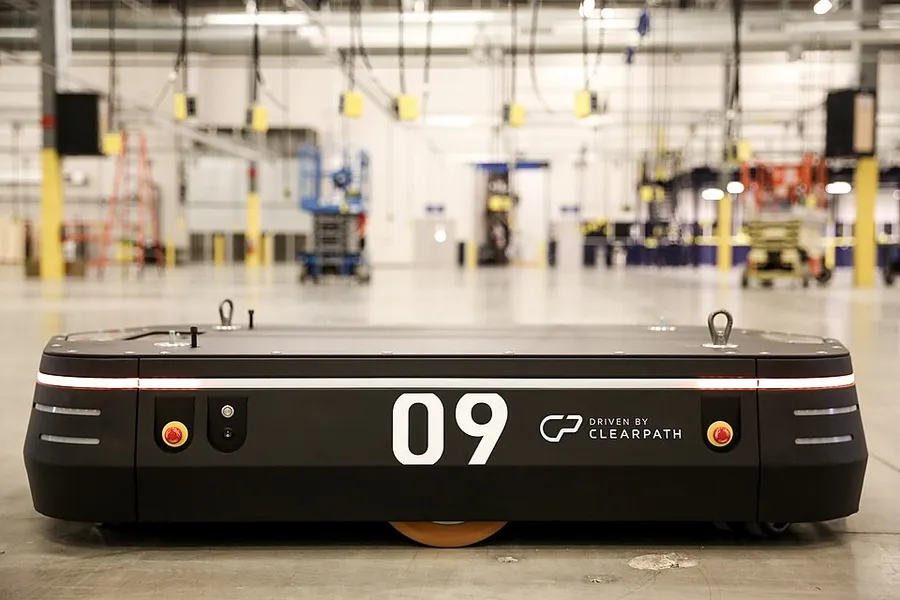
| AGV (Magnetic/QR) | Magnetic tape, QR code | 850,000–1,800,000 | 4–8 weeks | Fixed routes, pallet moves, production lines |
| AMR (SLAM-based) | LiDAR + SLAM | 1,500,000–3,500,000 | 2–4 weeks | E-commerce picking, mixed SKU, dynamic warehouses |
| Goods-to-Person AMR | LiDAR + Rack Lift | 2,800,000–4,500,000 | 4–6 weeks | High-volume picking, cuts walk time 70% |
| AS/RS Mini-load | Crane + Shuttle | 15–35 million/system | 4–8 months | Pharmaceutical, spare parts, cold chain |
| AS/RS Pallet | Stacker Crane | 35–80 million/system | 6–12 months | Warehouses >10,000 sq.m., high storage density |
The prices above are what factories and warehouses in the Amata City Chonburi Industrial Estate, WHA Eastern Seaboard, and Frasers Property Logistics Park in Bang Pa-in actually paid in 2025–2026, including installation, basic WMS integration, and 5 days of training.
AGVs still hold a large share in Tier-1 automotive factories with continuous production lines and unchanging layouts. Their per-unit price is 40–60% lower than AMRs and maintenance is far simpler — but if a route needs to change, the old magnetic tape has to be stripped out and completely relaid.
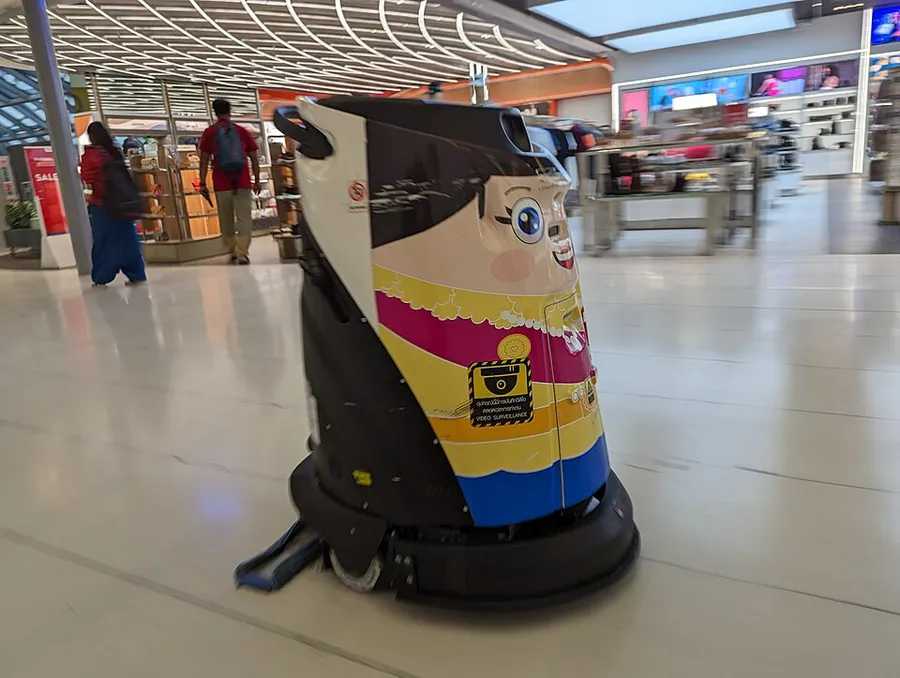
AMRs are growing the fastest among 3PLs and e-commerce fulfillment operations because they use LiDAR + SLAM to reroute automatically around obstacles, handle mixed SKUs well, and connect to a WMS via REST API on nearly any system.
AS/RS is a strategic-level investment suited to businesses that need maximum storage density and steady 24/7 throughput — pharmaceutical plants and cold storage facilities in Thailand that must hold stock at -25°C favor AS/RS because it reduces cold-room door openings and saves 30–40% on energy.
AGV Prices in Thailand 2026: Which Models Are Actually Used in Industrial Estates?
AGV prices in Thailand in 2026 depend primarily on payload, navigation type, and battery technology. The models popular in Tier-1 and Tier-2 automotive factories in the Amata, Eastern Seaboard, and Hemaraj estates include:
- MiR250 — 250 kg payload, top speed 2 m/s, priced at ฿1,400,000–1,800,000 with a charger for 24/7 operation. The main distributor in Thailand is Robotsystem, part of the Universal Robots Group.
- Quicktron M3 — 300 kg payload, SLAM navigation, priced at ฿1,200,000–1,500,000, used in the Lazada Eastern Bangkok Hub.
- Geek+ P800 — Goods-to-Person, 800 kg payload, priced at ฿2,800,000–3,500,000, installed at JD Central WHA Logistics.
- AGILOX ONE — omnidirectional, 1,000 kg payload, priced at ฿2,200,000–2,800,000, handling pallet moves in a FANUC robot cell.
- Hai Robotics HaiPick A42T — an ACR (Autonomous Case-handling Robot), priced at ฿3,200,000–4,200,000, used in the Pomelo Fashion DC.
These prices exclude Fleet Management Software (add ฿800,000–1,500,000 per system), charging stations (฿180,000–280,000 per station), and WMS integration (฿500,000–1,500,000 depending on complexity). The real total budget for a 4–6 unit fleet therefore lands at ฿8–14 million in the first year.
Case Study: How Fast Does a Thai 3PL Pay Back an AMR Installation?
Frasers Property Logistics Park in Bang Pa-in is a 3PL operating an 18,000 sq.m. fulfillment center that takes orders from 12 e-commerce brands, averaging 4,200 pick lines per day. It previously used 22 pickers per shift × 2 shifts = 44 people, with wages including OT of roughly ฿1,260,000/month, or ฿15.1 million per year.
In 2024, the Operations team decided to install 6 Goods-to-Person AMRs — Geek+ P800 units — with 3 picking stations, for a total investment of ฿18.5 million, made up of:
- 6 AMR P800 units × ฿2,950,000 = ฿17,700,000
- Movable Rack (200 shelves) = ฿4,200,000
- Fleet Management + WMS Integration = ฿2,600,000
- 4 Charging Stations + Training = ฿900,000
- Net of the BOI Smart Industry discount = ฿18,500,000
Results after 12 months: pickers reduced to 18 per shift × 2 shifts = 36 people, down by 8 (reassigned to QC and Outbound); pick throughput increased from 4,200 to 9,800 lines per day (up 133%); pick error dropped from 1.4% to 0.18%; and walk time fell 72%.
ROI Calculation: labor cost reduced by ฿2,880,000/year + added sellable capacity of ฿4,200,000/year = an annual ROI of ฿7,080,000 → payback in 31 months, exactly as calculated in the feasibility study (target 30–36 months). This figure is consistent with three other Thai 3PLs that installed comparable systems.
AS/RS in Thailand: Which Businesses Is It For, and What’s the Entry Budget?
AS/RS is a ฿15–80 million investment for which executives must calculate throughput and SKU velocity precisely before deciding. The systems actually installed in Thailand in 2024–2026 fall into three main types:
- Mini-load AS/RS for cartons/totes up to 50 kg, priced at ฿15–35 million, suited to pharmaceutical distributors and spare-parts warehouses — reference sites: DKSH Bang Phli and Zuellig Pharma Wang Noi.
- Pallet AS/RS for 1,000–1,500 kg pallets, with stacker cranes 18–25 meters tall, priced at ฿35–65 million, suited to FMCG and beverage — reference sites: ThaiBev Logistics and CPF Distribution Center.
- Cold Storage AS/RS operating at -25°C, priced at ฿55–80 million, saving 30–40% on energy versus a manual cold warehouse — reference site: JWD InfoLogistics Cold Chain Hub.
The advantage of AS/RS is storage density 3–5x higher than manual racking, with no reliance on labor in cold rooms where staff are hard to find. The downsides are a 6–12 month installation lead time and the fact that changing the layout afterward is nearly impossible — recommended for businesses that can forecast volume clearly 5–10 years out. Brands with a service network in Thailand include KUKA Swisslog, TGW, Daifuku, and Murata Machinery.
Warehouse AMRs: 5 Mistakes Thai Warehouse Executives Often Make
Although AMRs and AGVs deliver high ROI, plenty of projects in Thailand failed in 2023–2025. Operations teams evaluating a system should avoid the following five mistakes:
- Buying robots before auditing the WMS — many legacy WMS platforms don’t support REST APIs or webhooks, forcing AMRs to run standalone and unable to sync order status. That means an extra ฿1.5–3 million to first migrate the WMS to SAP EWM or Manhattan.
- Forgetting to calculate floor flatness — most AMRs require FF50/FL30 floors (DIN 18202). If an old warehouse floor isn’t level, the AMR will vibrate and the LiDAR will drift, requiring floor remediation at an added ฿800–1,500 per sq.m.
- Choosing robots with too little payload — a warehouse handling a mix of 5 kg cartons and 600 kg pallets must allow for the maximum payload. Buy a 250 kg AMR and the entire fleet will only be usable for some tasks.
- Neglecting End-of-Arm Tooling for the pick station — Goods-to-Person AMRs must be paired with a robotic arm that picks items from the movable rack. Choose the wrong gripper type and 15–25% of SKUs won’t be pickable.
- Not budgeting for the service contract from year 2 onward — the first year of service is free, but years 2–5 cost 8–12% of the robot’s price per year, potentially totaling ฿4–8 million over 5 years for a fleet of 6.
Warehouse Automation in Thailand: Next Steps for Warehouse Executives
Warehouse robots in Thailand in 2026 are no longer bleeding-edge technology — there are reference sites in the Amata, WHA, Frasers, and Suvarnabhumi Free Zone estates to benchmark against for real. The recommendation for executives making a decision is to start with a 2-unit AMR pilot project on the highest-volume pick-to-pack route, to prove ROI within 6–9 months before scaling the fleet. Avoid a full AS/RS investment in the first phase if you don’t yet have stable throughput data — a ฿35–80 million system is extremely hard to change later. For 3PLs and e-commerce operations that need to scale fast, AMRs from MiR, Geek+, or Quicktron paired with an API-capable WMS are the lowest-risk choice. Automotive factories with a fixed layout that need maximum reliability should still choose AGVs from KUKA Swisslog or Daifuku. Explore more in the AGV/AMR category and compare integrators with Palletizing Robots to plan a complete outbound process end to end.
Related FAQ
How many types of warehouse robots are there in Thailand 2026, and how do they differ?
There are three main groups: AGVs (Automated Guided Vehicles) that follow magnetic tape or QR codes, priced at ฿850,000–1,800,000 per unit; AMRs (Autonomous Mobile Robots) that navigate freely using SLAM, priced at ฿1,500,000–3,500,000 per unit; and AS/RS (Automated Storage and Retrieval Systems), high-bay automated racking systems priced at ฿15–80 million per system. AMRs are growing the fastest in Thailand because they are easy to set up and require no floor modification.
What is the price difference between an AGV and an AMR in Thailand, and which should I choose?
AGVs start at ฿850,000 while AMRs start at ฿1,500,000 — a difference of 70–100%, because AMRs include LiDAR and a more expensive SLAM algorithm. However, AMRs can be installed and running in 2–4 weeks, whereas AGVs require laying magnetic tape throughout the warehouse, taking 4–8 weeks with no way to reroute afterward. If your warehouse changes layout often or handles mixed SKUs, an AMR is the better value.
How many years does warehouse automation take to pay back in a 3PL business in Thailand?
Thai 3PLs handling 2,000–5,000 pick lines per day that install 4–8 AMRs pay back within 24–36 months, based on real-world data from WHA Mega Logistics and Frasers Property Logistics Park — cutting labor by 40–60%, reducing pick error from 1.2% to 0.15%, and increasing throughput by 2–2.5x. The key conditions are having a WMS that supports APIs and running two or more shifts.